
The real estate industry in the United States is rapidly evolving through digital transformation. In major cities like Los Angeles, technology is becoming an important part of how properties are bought, sold, managed, and valued. One of the biggest innovations driving this transformation is artificial intelligence. Today, AI in real estate is helping agents, brokers, investors, and property managers make smarter and faster decisions.

From automated property valuations to predictive market analysis, artificial intelligence is changing traditional real estate operations. Businesses are increasingly adopting real estate technology to improve efficiency, reduce manual work, and enhance customer experiences. Companies such as Maven Swami recognize the growing role of intelligent automation in shaping the future of property management and real estate services.
This article explores how AI and real estate are connected, the benefits of using AI-powered systems, popular tools, emerging trends, and how artificial intelligence is transforming the Los Angeles property market.
Understanding AI in Real Estate
Artificial intelligence refers to computer systems that can perform tasks requiring human intelligence. These systems can analyze data, identify patterns, automate processes, and make predictions based on large datasets.
In the property sector, AI in real estate industry applications are helping businesses:
- Analyze property values
- Predict housing trends
- Improve customer service
- Automate marketing
- Detect investment opportunities
- Enhance property management
As the Los Angeles real estate market becomes more competitive, technology-driven decision-making is becoming essential.
Why Los Angeles Is Embracing Real Estate Technology
Los Angeles is one of the most active and expensive property markets in the United States. The city’s real estate environment includes:
- Luxury residential properties
- Commercial developments
- Rental apartments
- Vacation properties
- Smart homes
Several factors are increasing the adoption of real estate AI solutions in Los Angeles.
Rising Property Prices
Property values in Los Angeles fluctuate frequently, making accurate pricing and market predictions critical.
High Competition
Real estate agents and brokers need faster access to data and customer insights.
Growing Demand for Automation
Property businesses are using AI automation to reduce repetitive tasks and improve productivity.
Data-Driven Investment Decisions
Investors rely on AI-powered analytics to identify profitable locations and market opportunities.
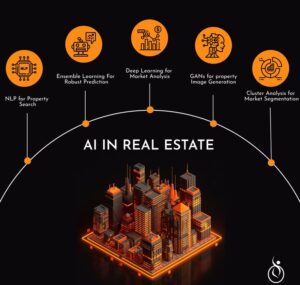
AI in Real Estate: Your New Virtual Property Valuer
One of the most important uses of AI is automated property valuation. Traditional property valuation methods often require:
- Physical inspections
- Comparative market analysis
- Manual calculations
- Historical sales reviews
Today, AI-powered valuation systems can process large amounts of real estate data within seconds.
These systems analyze:
- Property location
- Market demand
- Nearby amenities
- Crime statistics
- School districts
- Historical pricing trends
- Neighborhood growth patterns
This is why many experts refer to AI as a “virtual property valuer.”
How AI Is Changing Real Estate in USA
The impact of AI is growing across the American property market. Businesses are increasingly adopting intelligent systems to improve operations and customer engagement.
Automated Property Recommendations
AI algorithms recommend properties based on:
- Budget
- Location preferences
- Lifestyle choices
- Family requirements
Platforms such as Zillow and Redfin use AI-powered recommendation systems to improve user experiences.
Predictive Market Analytics
AI helps investors predict:
- Future property prices
- Market demand
- Rental growth
- Investment opportunities
Predictive analytics are especially useful in large metropolitan markets like Los Angeles.
AI Chatbots for Customer Support
Many real estate businesses use AI chatbots to:
- Answer customer questions
- Schedule property visits
- Provide pricing information
- Assist with lead generation
Chatbots improve response times and customer satisfaction.
Virtual Property Tours
AI-powered virtual tours allow buyers to explore properties remotely.
Technologies used include:
- 3D visualization
- Virtual reality
- Augmented reality
This feature is particularly valuable for international buyers and remote investors.
The Role of Machine Learning in Real Estate AI
Machine learning is a branch of artificial intelligence that improves performance through data analysis and pattern recognition.

In ai in realestate, machine learning helps:
- Forecast market changes
- Detect fraud
- Improve property valuations
- Analyze customer behavior
- Optimize pricing strategies
Machine learning models become more accurate over time as they process additional market data.
Using AI in Real Estate for Property Valuation
Property valuation is one of the most important applications of AI technology.
Automated Valuation Models (AVMs)
AVMs use algorithms to estimate property values using real-time market information.
Factors analyzed include:
- Comparable sales
- Property size
- Neighborhood demand
- Local infrastructure
- Economic conditions
AVMs reduce human error and improve valuation speed.
Benefits of AI Property Valuation
Faster Analysis
AI can analyze thousands of properties instantly.
Improved Accuracy
Data-driven models often provide more consistent valuations.
Reduced Operational Costs
Automation minimizes manual labor requirements.
Better Investment Insights
Investors gain access to real-time market intelligence.
AI Automation in Real Estate Industry
Automation is helping businesses improve operational efficiency.
Lead Management Automation
AI systems can:
- Score leads
- Prioritize buyers
- Track customer interactions
Automated Document Processing
AI software extracts and processes data from:
- Contracts
- Lease agreements
- Mortgage documents
Smart Property Management
Property managers use AI to:
- Monitor maintenance needs
- Track occupancy
- Manage tenant communication
AI Real Estate Tools Used by Modern Businesses
Several intelligent tools are widely used in the real estate sector.

CRM Platforms
AI-powered CRM systems improve customer relationship management.
Popular platforms include:
- Salesforce
- HubSpot
Property Valuation Platforms
Automated valuation tools help estimate property prices more accurately.
Examples include:
- CoreLogic
- HouseCanary
AI Marketing Tools
Marketing automation platforms help businesses:
- Personalize campaigns
- Target audiences
- Improve conversion rates
Examples:
- Mailchimp
- Marketo
Real Estate Technology Trends in Los Angeles
The Los Angeles property market is adopting several advanced technologies.
Smart Homes
AI-enabled smart homes use:
- Voice assistants
- Automated lighting
- Security systems
- Energy management tools
Companies like Google Nest and Amazon Alexa have increased smart home adoption.
Blockchain and AI Integration
Blockchain technology improves:
- Transaction transparency
- Smart contracts
- Digital property records
Combining AI with blockchain enhances security and efficiency.
Big Data Analytics
Big data platforms analyze large property datasets for:
- Market forecasting
- Customer behavior analysis
- Investment trend prediction
Benefits of AI in Real Estate Industry
Artificial intelligence offers advantages for multiple stakeholders.

Benefits for Buyers
- Faster property searches
- Personalized recommendations
- Virtual tours
- Better pricing transparency
Benefits for Sellers
- Improved property visibility
- Automated marketing
- Faster buyer matching
Benefits for Real Estate Agents
- Time-saving automation
- Better lead generation
- Enhanced customer communication
Benefits for Investors
- Data-driven investment decisions
- Risk analysis
- Predictive market insights
AI and Real Estate Marketing
Marketing is becoming increasingly data-driven.
Personalized Advertising
AI helps businesses target customers based on:
- Search history
- Income level
- Property preferences
- Online behavior
Automated Content Creation
Some AI systems assist with:
- Property descriptions
- Email campaigns
- Social media content
Challenges of AI in Real Estate
Despite its advantages, AI adoption also presents challenges.
Data Privacy Concerns
Property businesses handle sensitive personal and financial data.
High Initial Investment
Advanced AI systems may require significant implementation costs.
Dependence on Data Quality
Poor-quality data can reduce prediction accuracy.
Regulatory Compliance
Businesses must comply with privacy laws and property regulations.
Importance of Data in Real Estate AI
AI systems rely heavily on accurate and updated information.
Important data sources include:
- Property listings
- Tax records
- Census information
- Mortgage data
- Economic reports
- Consumer behavior analytics
The quality of AI predictions depends directly on the quality of available data.
AI in Commercial Real Estate
Commercial property markets are also benefiting from automation.
Space Utilization Analysis
AI helps optimize office layouts and property utilization.
Tenant Retention
Property managers analyze tenant behavior to improve retention strategies.
Investment Forecasting
Commercial investors use predictive analytics to evaluate risks and returns.
AI in Residential Real Estate
Residential real estate is experiencing major digital transformation.
Smart Search Systems
Buyers receive property recommendations tailored to their needs.
Mortgage Assistance
AI tools help evaluate loan eligibility and financial risk.
Home Price Predictions
Predictive models estimate future property appreciation.
AI and Sustainable Real Estate
Sustainability is becoming increasingly important in Los Angeles real estate development.
AI supports sustainable practices by:
- Monitoring energy usage
- Improving building efficiency
- Reducing waste
- Supporting smart grid systems
Green buildings with AI-driven automation are becoming more common in urban developments.
The Future of Real Estate AI
The future of ai in real estate continues evolving rapidly.
Emerging technologies include:
- Generative AI
- Digital twins
- Autonomous property inspections
- AI-powered investment advisors
- Smart city integrations
As technology advances, property transactions may become more automated, efficient, and data-driven.
AI-Powered Real Estate Investment Strategies
Investors are increasingly using AI to identify opportunities.
Market Trend Analysis
AI systems monitor:
- Population growth
- Employment rates
- Rental demand
- Infrastructure projects
Risk Assessment
Algorithms identify potential financial risks before investment decisions are made.
Portfolio Optimization
AI helps investors diversify portfolios for better long-term performance.
Ethical Considerations in AI Real Estate
Ethical AI usage is becoming an important discussion in the industry.
Algorithm Bias
AI systems may unintentionally reflect biased historical data.
Transparency
Users should understand how automated decisions are generated.
Human Oversight
AI should support human decision-making rather than completely replace professionals.
Responsible AI implementation is essential for maintaining trust in the real estate sector.
How Maven Swami Views AI in Real Estate
Maven Swami recognizes that technology is transforming modern property businesses. AI-driven systems are helping organizations improve efficiency, analyze market data, and automate complex workflows.

As Los Angeles continues adopting digital transformation across industries, real estate companies increasingly rely on intelligent software solutions for property management, customer engagement, and investment analysis.
The growing role of AI in property valuation, automation, and predictive analytics demonstrates how technology is reshaping the future of the real estate industry.
Why AI Adoption Is Growing in Los Angeles
Los Angeles offers a strong environment for AI innovation due to:
- Large real estate market
- Technology-driven businesses
- High investor activity
- Growing smart city initiatives
- Demand for operational efficiency
Real estate professionals in Los Angeles are increasingly investing in AI tools to stay competitive in a fast-changing market.
Key Technologies Supporting Real Estate AI
Several technologies work together to power AI systems.
Cloud Computing
Cloud infrastructure supports:
- Large data storage
- Scalability
- Remote accessibility
Major providers include:
- Amazon Web Services
- Microsoft Azure
- Google Cloud Platform
Natural Language Processing (NLP)
NLP enables AI systems to:
- Understand customer queries
- Analyze contracts
- Generate automated responses
Computer Vision
Computer vision technology helps analyze:
- Property images
- Building conditions
- Architectural layouts
This improves property inspections and listing analysis.
How AI Improves Customer Experience
Customer expectations continue evolving in digital real estate markets.
AI improves experiences through:
- Faster communication
- Personalized recommendations
- Virtual assistance
- Instant property information
- 24/7 customer support
Buyers and renters increasingly expect digital-first experiences.
Real Estate AI and Smart Cities
AI technology plays a major role in smart city development.
In cities like Los Angeles, smart city systems use AI for:
- Traffic management
- Infrastructure planning
- Energy optimization
- Urban development analysis
Real estate businesses benefit from these advancements through better planning and improved property demand forecasting.
Conclusion
Artificial intelligence is reshaping the real estate industry across the United States, especially in major cities like Los Angeles. From automated property valuation to predictive analytics and smart property management, AI in real estate is creating new opportunities for efficiency, accuracy, and customer engagement.
The rise of real estate technology, AI-powered valuation systems, machine learning, and automation tools demonstrates how digital transformation is becoming essential in modern property markets. Businesses using AI automation in real estate industry operations can improve productivity, reduce manual tasks, and gain deeper market insights.
As technology continues evolving, AI will likely become an even more important part of property buying, selling, investing, and management. Companies like Maven Swami understand the growing importance of intelligent systems in helping real estate businesses adapt to changing market demands and digital innovation.
The future of AI and real estate in Los Angeles points toward smarter, more connected, and highly data-driven property ecosystems that support better decision-making and improved customer experiences.