
In the fast-moving world of technology and digital innovation, the concept of a Minimum Viable Product (MVP) has become a cornerstone for startups and businesses aiming to test their ideas efficiently. Whether you are an entrepreneur with a disruptive app idea or a growing company exploring a new digital product, understanding the MVP development cost is essential for smart planning and sustainable growth.
At Maven Swami, we work closely with founders and organizations in Miami, FL, to transform initial ideas into functional MVPs that validate market assumptions and attract investors. This article provides a detailed, easy-to-understand breakdown of what goes into the cost to build an MVP, what factors influence pricing, and how to make the most of your MVP budget.
What Is an MVP?
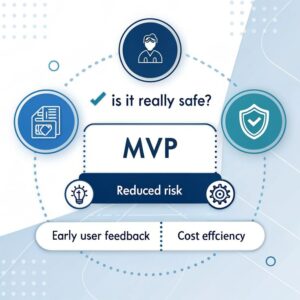
A Minimum Viable Product (MVP) is a simplified version of a product that includes only the most essential features needed to solve a specific problem for early users. The primary goal is to launch quickly, collect feedback, and refine the product based on real user responses before investing heavily in full-scale development.
This lean approach helps reduce risks, improve time-to-market, and optimize costs. By focusing on the core value proposition, businesses can ensure that future development aligns with user demand.
Why MVP Development Matters
Before diving into costs, it’s important to understand why MVP development is such a vital step in modern product design:
-
Validates business ideas: An MVP allows you to test assumptions before fully committing resources.
-
Reduces development risks: You identify what works and what doesn’t early in the process.
-
Attracts investors: Having a tangible, working version of your product increases credibility with investors and stakeholders.
-
Speeds up time-to-market: Launching an MVP lets you start building user traction while refining features.
For startups in Miami, Florida, where the technology and innovation scene continues to grow, an MVP provides a strategic advantage in a competitive environment.
Factors That Influence MVP Development Cost
When considering the cost to build an MVP, there isn’t a one-size-fits-all answer. Several factors impact the overall MVP development cost, and understanding them will help you allocate your MVP budget effectively.
1. Scope and Complexity of the Product
The biggest cost driver is the scope of features you choose to include. A simple app with basic functions will naturally cost less than one that requires integrations, AI features, or complex backend systems.
For example, a basic marketplace app may include user registration, listings, and payments, while an advanced version may have real-time notifications, analytics, and personalized recommendations — each adding layers of complexity and expense.
2. Platform Choice
Deciding between web, mobile (iOS/Android), or cross-platform development directly affects cost.
-
Web MVPs often cost less because they require fewer platform-specific adjustments.
-
Native apps for iOS and Android may double development time if built separately.
-
Cross-platform solutions (e.g., React Native, Flutter) can be more cost-efficient for startups aiming for both ecosystems.
3. Design and User Experience
A well-designed MVP isn’t just about functionality — it’s also about usability. Investing in UX/UI design ensures your product feels intuitive and engaging. While great design may increase upfront costs, it can prevent expensive reworks later.
4. Development Team and Expertise
The cost to develop an MVP varies depending on the team’s location, skill level, and experience. In Miami, FL, hiring a local development team ensures better communication and a shared understanding of market trends. Alternatively, some companies combine local strategy with offshore development to balance cost and quality.
5. Technology Stack
Choosing the right technology stack (frameworks, databases, languages, and tools) affects both short-term and long-term costs. Technologies like Node.js, React, Flutter, and AWS are popular choices for scalability and efficiency.
6. Timeline and Project Management
A shorter delivery timeline may increase costs, especially if developers need to work overtime or parallelize tasks. On the other hand, longer timelines may save money but delay your go-to-market strategy.
Average MVP Development Cost in Miami, FL
While prices vary, the average cost to build an MVP in Miami, Florida generally ranges between $30,000 and $120,000. This broad range reflects the diversity of project scopes, from small prototypes to full-featured pilot versions.
Here’s a rough breakdown of typical MVP app cost categories:
| Type of MVP | Estimated Cost Range | Example |
|---|---|---|
| Simple Web MVP | $25,000 – $40,000 | Basic SaaS prototype |
| Mobile App MVP | $40,000 – $80,000 | Cross-platform app |
| Complex MVP | $80,000 – $120,000+ | AI-driven or enterprise app |
These estimates cover essential phases such as product discovery, design, development, testing, and launch.
Cost Breakdown: Where Does the Money Go?
Understanding how much it costs to develop an MVP requires breaking down key components:

1. Discovery & Research (10–15%)
This phase involves understanding your business goals, target users, and competitors. It sets the foundation for all design and development decisions.
2. Design (15–20%)
Includes wireframes, prototypes, and interface design to ensure your MVP offers an intuitive experience.
3. Development (40–50%)
The core coding process — building frontend, backend, and integrations. This is where most of your MVP budget is spent.
4. Testing & Quality Assurance (10–15%)
Quality assurance ensures your product works reliably before release. Skimping on this stage can lead to costly fixes later.
5. Deployment & Maintenance (5–10%)
Once launched, ongoing support ensures the MVP stays stable and secure while collecting valuable user feedback.
Reducing MVP Costs Without Sacrificing Quality
Every founder wonders: How much should I spend on an MVP? The answer depends on your goals, but there are smart strategies to keep expenses under control.
1. Prioritize Core Features
Focus only on the must-have features that deliver your product’s main value. Use user feedback to decide what to build next.
2. Leverage Open-Source Tools
Open-source frameworks and libraries can reduce licensing fees and accelerate development time.
3. Consider Cross-Platform Development
Using cross-platform tools allows one codebase to serve both iOS and Android, significantly reducing costs.
4. Outsource Strategically
Partnering with trusted development firms like Maven Swami ensures access to experienced professionals who can optimize the process and avoid unnecessary spending.
5. Build Iteratively
Instead of launching a fully featured version, release in stages — each iteration guided by user insights.
Common Mistakes That Increase MVP Cost
Avoiding these pitfalls can save both time and money:
-
Overloading features: Trying to include everything from the start defeats the purpose of an MVP.
-
Skipping research: Lack of market validation can lead to building a product no one wants.
-
Poor project management: Disorganized workflows can cause scope creep and missed deadlines.
-
Neglecting feedback: Ignoring early user input often results in costly redesigns.
Estimating Your MVP Budget
To determine how much to spend on an MVP, start by aligning your financial resources with your product goals. A typical budgeting formula might allocate:
-
40–50% for development
-
20% for design
-
15% for testing
-
10% for project management
-
5–10% for post-launch improvements
Your MVP budget should also include a contingency (around 10–15%) for unexpected challenges or opportunities that arise during development.
The Role of Location in MVP Costs: Why Miami, FL?
Choosing Miami, Florida as your MVP development hub brings unique advantages. The city has rapidly evolved into a thriving tech ecosystem, attracting startups, investors, and development talent from around the world.

Miami’s diverse business environment, bilingual talent pool, and strategic connection to Latin American markets make it an ideal location for innovation. Local collaboration opportunities with universities, accelerators, and venture firms also provide support beyond pure development costs.
At Maven Swami, we’ve seen how Miami’s growing community of tech professionals enables high-quality MVPs to be built more efficiently and collaboratively.
How to Choose the Right MVP Development Partner
Selecting the right partner can make or break your MVP success. Here are key factors to consider:
-
Experience: Choose teams with a proven track record in MVP design and development.
-
Transparency: Ensure they provide clear pricing and communication throughout the project.
-
Technical Expertise: Check for proficiency in modern frameworks, APIs, and scalable architecture.
-
Post-Launch Support: Your MVP’s real journey begins after launch — ensure ongoing improvement is part of the plan.
Working with Maven Swami means combining technical excellence with a deep understanding of business strategy — ensuring your MVP not only functions but thrives in the marketplace.
Realistic Expectations: What an MVP Is Not
While MVPs are powerful tools, it’s important to understand that they are not full products. They are starting points — designed to validate ideas, attract users, and gather data.
Expect to iterate. The best MVPs evolve based on feedback, analytics, and real-world use. This process helps ensure long-term scalability and reduces the risk of building unnecessary features.
The Future of MVP Development in Miami
As Miami cements its reputation as a technology hub, demand for efficient and innovative product development continues to rise. Startups and established firms alike are recognizing the value of MVP development as a strategic first step toward sustainable digital transformation.
Advances in AI, low-code tools, and cloud platforms will continue to make MVPs faster and more affordable to build — empowering more entrepreneurs to test and scale their ideas effectively.
Estimating Return on Investment (ROI) for MVP Development
When evaluating the MVP development cost, one of the most important considerations is understanding the potential return on investment (ROI). An MVP isn’t just an expense — it’s a strategic investment that provides tangible value in validating your product concept and improving decision-making.
An MVP allows startups and businesses to determine product-market fit without committing to a full-scale build. By launching a minimal version, you gather valuable insights from real users, measure traction, and attract potential investors who see actual progress rather than ideas on paper.
For many founders in Miami, FL, the ROI of an MVP comes from three key outcomes:
-
Faster Market Validation: Reducing time to verify an idea’s viability.
-
Lower Risk Exposure: Avoiding wasteful spending on unwanted features.
-
Increased Investor Confidence: Demonstrating measurable engagement and a working prototype.
For example, if you spend $50,000 on an MVP and the data it generates helps you avoid a $250,000 full-scale project failure, the ROI is substantial. The key lies in building strategically — prioritizing insights over perfection.
MVP Development Cost vs. Full Product Development Cost
Understanding the difference between MVP development cost and full product development cost helps founders make informed financial decisions.
While an MVP might range from $30,000 to $120,000 depending on complexity and location, a complete, feature-rich application can easily exceed $300,000 or more.
Why such a gap?
Because an MVP includes only the core functionality needed to test the idea, while a full product involves:
-
Advanced UX/UI design
-
Full user authentication systems
-
Payment integrations
-
Complex analytics
-
Security and scalability enhancements
-
Ongoing support and feature expansion
Building an MVP first allows teams to refine these larger investments. Once feedback validates the concept, scaling up becomes more efficient and precise — saving both money and time in the long run.
At Maven Swami, we often recommend starting with a functional MVP to test market response before committing to comprehensive development. This phased approach ensures that each dollar of your MVP budget contributes to measurable growth.
The Role of Product Discovery in MVP Cost Management
An overlooked but crucial stage in the MVP development process is product discovery. This phase helps clarify user needs, define priorities, and set realistic expectations for the cost to build an MVP.
Product discovery typically includes:
-
Market analysis: Understanding competitors and audience pain points.
-
Feature prioritization: Identifying must-have vs. nice-to-have features.
-
Technical feasibility studies: Determining the right tools and frameworks.
-
Budget planning: Estimating realistic development costs and timelines.
Investing in this stage might represent 10–15% of your total MVP cost, but it prevents expensive missteps later. It aligns your team around clear objectives and helps ensure every feature supports the core user problem.
In cities like Miami, where innovation moves quickly, skipping this step can lead to unnecessary complexity and inflated expenses. A focused discovery process creates the foundation for lean, effective development.
How Different Industries Affect MVP Cost
The cost to develop an MVP can vary significantly by industry. While the development principles remain similar, the technical requirements, user expectations, and compliance needs can differ.

1. Fintech MVPs
Fintech applications often require high levels of security, data encryption, and compliance with financial regulations. Features like authentication, payment gateways, and audit trails make these MVPs more expensive. Average fintech MVP development cost: $70,000–$150,000.
2. Healthtech MVPs
Healthcare-related products must comply with regulations such as HIPAA in the U.S. Data security, user privacy, and medical integrations add to the cost. Average cost: $80,000–$160,000.
3. E-commerce MVPs
An e-commerce MVP includes catalog management, cart systems, and secure payment options. Depending on scale, cost to build an MVP for e-commerce can range between $40,000–$100,000.
4. EdTech MVPs
Educational platforms require interactive interfaces, video integration, and user progress tracking. These features can affect the MVP budget, often ranging from $50,000–$90,000.
5. SaaS MVPs
Software-as-a-Service platforms focus on scalability, subscription models, and analytics dashboards. They tend to fall between $60,000–$120,000, depending on complexity.
Understanding these differences helps founders in Miami, FL, budget accurately and choose the right development path for their industry.
Choosing the Right Tech Stack for Your MVP
Your technology stack directly influences performance, scalability, and overall MVP cost. Selecting the right combination of frontend, backend, and database technologies determines not only your initial investment but also the ease of future updates.
Popular stacks used by experienced development teams like Maven Swami include:
-
Frontend: React.js, Vue.js, or Angular
-
Backend: Node.js, Python (Django/Flask), Ruby on Rails
-
Mobile: Flutter, React Native, or Swift/Kotlin
-
Database: PostgreSQL, MongoDB, Firebase
-
Cloud Hosting: AWS, Azure, or Google Cloud
Each choice carries cost implications. For instance, using open-source frameworks can reduce licensing fees, while cloud-based infrastructures allow flexible scaling.
When clients in Miami consult us about how much it costs to build an MVP, we often emphasize long-term efficiency over initial savings. A well-chosen tech stack ensures your MVP grows smoothly into a robust final product.
Understanding the Hidden Costs in MVP Development
Beyond the core MVP app cost, several hidden or indirect expenses can arise during the development process. Being aware of these helps prevent budget surprises.
-
Third-party Integrations: APIs for payment gateways, maps, or notifications can have subscription fees.
-
Maintenance and Hosting: Post-launch hosting, bug fixes, and updates can account for 15–20% of your annual MVP expenses.
-
Licensing and Compliance: Depending on your industry, you may need legal or security certifications.
-
Marketing and Launch Costs: Even the best MVP needs visibility — consider early-stage digital marketing, landing pages, and analytics.
-
Team Communication Tools: Collaboration tools like Slack, Jira, or Notion may add operational costs.
Planning for these early ensures your MVP budget remains realistic and sustainable.
Agile Development and Its Impact on MVP Costs
Adopting an Agile development methodology can greatly affect how efficiently an MVP is built. Agile focuses on iterative progress, continuous feedback, and quick adaptation — all essential for startups managing tight budgets.
Benefits of Agile for MVPs:
-
Cost Efficiency: Small iterations prevent large reworks.
-
Transparency: Regular updates keep stakeholders informed.
-
Flexibility: Easily adjust priorities based on feedback.
-
Faster Delivery: Continuous releases help test ideas faster.
At Maven Swami, Agile principles are embedded in every stage of development. This ensures clients in Miami, FL, maintain control over their MVP cost and timeline while achieving maximum product value.
Post-MVP Development: Scaling Your Product
Once your MVP is validated, the next stage is scaling — turning your minimum viable product into a market-ready solution.
This process typically includes:
-
Feature Expansion: Adding functionality based on user feedback.
-
Design Refinement: Enhancing UI/UX for better engagement.
-
Architecture Optimization: Ensuring the platform can handle higher user volumes.
-
Performance Tuning: Speed and stability improvements.
-
Security Enhancements: Advanced data protection for growth.
While this stage increases your investment, the insights gained from your MVP ensure that every addition aligns with real customer needs.
For Miami-based startups, scaling an MVP often involves preparing for investor rounds, onboarding new users, and integrating analytics to measure performance.
Real-World MVP Examples and Their Costs
To better understand how much it costs to build an MVP, looking at real-world examples can be insightful.

-
Airbnb: Initially, Airbnb’s MVP was a simple website allowing users to rent air mattresses in a San Francisco apartment. Built with minimal cost, it validated the concept of peer-to-peer lodging.
-
Dropbox: The company’s first MVP was a short demo video explaining the idea. It attracted thousands of signups before a single line of code was written.
-
Uber: UberCab, the first version, focused only on connecting drivers and passengers within San Francisco. It validated market demand before scaling globally.
These examples show that MVP success doesn’t depend on high budgets but on a clear focus and rapid validation. Whether your MVP app cost is $20,000 or $100,000, the goal remains to test, learn, and evolve quickly.
The Cost of Building an MVP App for Startups in Miami
For startups in Miami, FL, local economic conditions, labor rates, and technical talent availability influence the cost to build an MVP app.
Hiring a local development team provides several advantages:
-
Direct collaboration and communication.
-
Familiarity with U.S. compliance and business norms.
-
Easier project oversight and accountability.
However, costs in Miami may be higher than in offshore regions. To balance quality and cost, many companies adopt a hybrid model, combining local project management with offshore engineering. This approach can lower overall MVP development cost without compromising quality.
Budgeting Tips for MVP Success
Managing your MVP budget effectively ensures smoother execution and better financial control.
Here are some actionable tips:
-
Define clear objectives: Know exactly what problem the MVP solves.
-
Set a fixed budget cap: Prevent scope creep by defining financial boundaries.
-
Track progress weekly: Use project management tools to monitor spending.
-
Evaluate every feature: Only build what adds measurable value.
-
Prepare for iterations: Set aside 10–15% of your budget for refinements.
Financial discipline during MVP development sets the tone for long-term project success and investor trust.
The Impact of Team Composition on MVP Cost
The structure and experience of your development team greatly influence the cost to develop an MVP.
A typical team includes:
-
Project Manager – Coordinates planning, budget, and communication.
-
UI/UX Designer – Focuses on visual design and user journey.
-
Frontend & Backend Developers – Build core functionality.
-
QA Engineer – Ensures quality and reliability.
-
DevOps Specialist – Manages deployment and infrastructure.
Larger or more experienced teams may increase the MVP app cost, but they also reduce errors and speed up delivery. At Maven Swami, balanced teams ensure optimal resource use and clear accountability.
Cost Prediction Tools and Estimators
Modern businesses often use MVP cost estimation tools to gain an initial understanding of project scope. These online calculators ask about project type, features, and technology to provide a rough cost to build an MVP.
However, while helpful for early planning, they can’t replace detailed consultations. Every project has unique variables — from custom integrations to design needs — that affect the final MVP development cost.
For precise estimates, professionals like Maven Swami analyze technical requirements, design complexity, and desired timeline to create an accurate, transparent quote.
Preparing for Long-Term Product Growth
Building an MVP isn’t just about launch — it’s about preparing for scalability and sustainability. To ensure your initial investment pays off, you should:
-
Monitor user metrics from day one.
-
Implement feedback loops for improvement.
-
Optimize infrastructure for future growth.
-
Document your codebase for smooth handovers.
-
Maintain agile adaptability for market changes.
A well-structured MVP sets the stage for a successful product lifecycle, attracting more users, investors, and long-term partnerships.
Conclusion
Determining the cost to build an MVP involves many moving parts — from design and development to testing and ongoing support. The key is understanding your goals, prioritizing essential features, and partnering with experienced professionals who can bring your vision to life efficiently.
In Miami, FL, the growing technology landscape offers access to skilled talent and collaborative opportunities that make MVP development both practical and strategic.
At Maven Swami, we believe an MVP is not just a product — it’s a pathway to discovery, innovation, and growth. By managing your MVP budget wisely and focusing on what truly matters to your users, you can build a solid foundation for long-term success.